

In the United States, queer and trans communities face intensifying state repression, millions have lost their bodily autonomy, civil rights are being dismantled, and activists risk deportation simply for challenging U.S. foreign policy. Abroad, the Trump Administration has murdered Venezuelans, Colombians, and Trinidadians as it prepares for a new military intervention in Latin America. Meanwhile, genocidal campaigns and mass atrocities in Palestine, Sudan, and Congo continue unabated, buoyed by U.S. complicity in mass displacement, surveillance, and resource extraction.
This Human Rights Day invites a reckoning: How did a global system built in the name of “universal rights” become structurally incapable of constraining state violence? The failures of the UN’s human rights and security architecture, combined with deliberate efforts to weaken what limited protections existed, have brought us to a moment when impunity reigns and the thinnest pretexts provide cover for the killings of civilians, the deportation and torture of migrants, the imprisonment and silencing of dissenters, and the erosion of freedoms for all.
Below is some work we have done this year with partners all around the world to breathe life into the human rights system and to center human dignity as both the yardstick against which we measure the legitimacy of ideologies, laws, policies, and practices, as well as the horizon of the world we are building.
We are guided in our work by the late, visionary Peter Weiss and his partner in life and work, Cora Weiss, who passed away just two days ago on what would have been Peter’s 100th birthday. Cora, a lifelong peace activist and human rights champion, believed deeply in the power of people to work together to bring forth a better world. As Peter argued, we must reorient our approach: not conform our pursuit of justice to existing law, but reshape law to serve universal justice, through universal jurisdiction, people-centered accountability, and movements that refuse to allow states to define the limits of our rights.
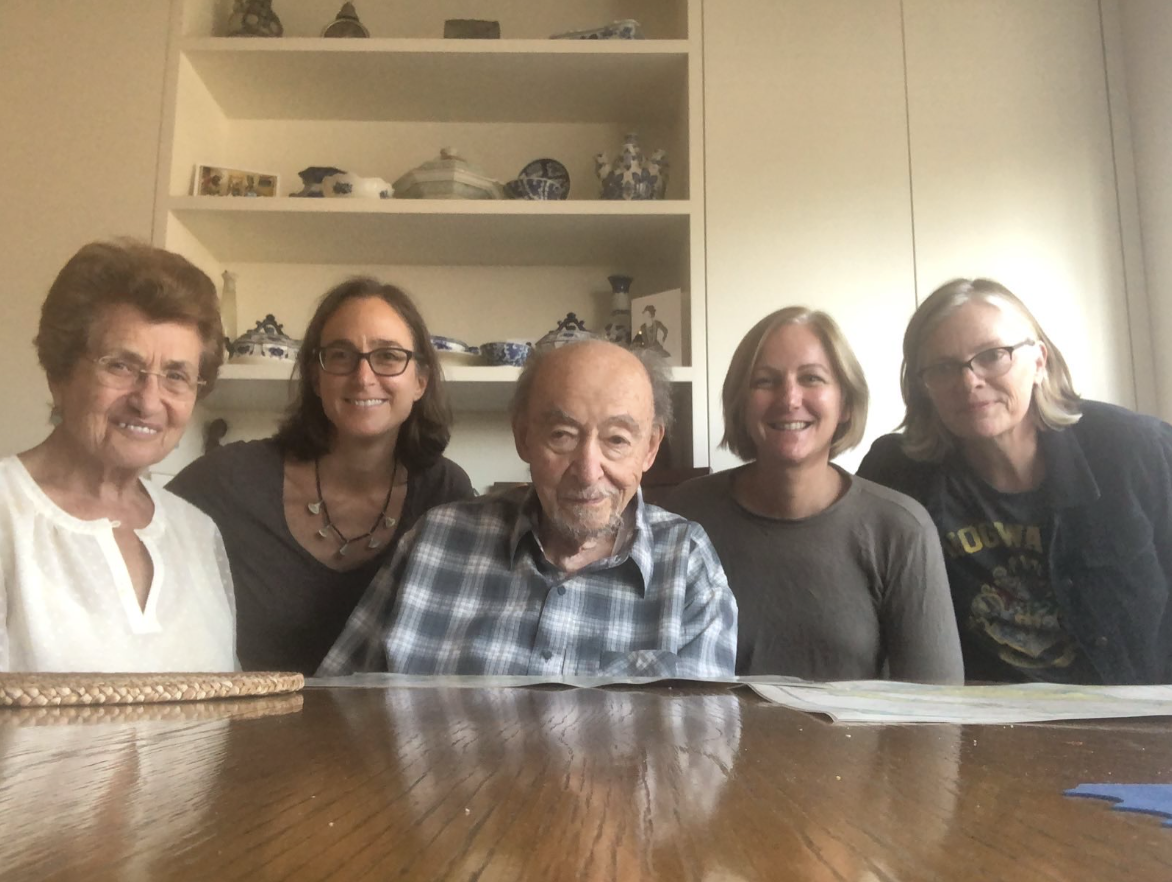
Photograph of Peter and Cora Weiss with Deputy Legal Director Maria LaHood and Senior Staff Attorneys Katherine Gallagher and Pam Spees.
Venezuela: A Case Study in Collapsing Accountability
We can trace a throughline from ideologies and policies of the so-called “War on Terror” to the U.S. military’s targeted strikes and murder of over 87 civilians in the Caribbean, in clear violation of domestic and international law. The attempted suspension of human rights through dehumanization and criminalization is not a new phenomenon, but rather a bipartisan effort by successive U.S. administrations to circumvent the law and evade accountability. The uniquely belligerent and bullying nature of the Trump administration further entrenches the U.S.’s imperial ambitions and behavior, rooted in a racist hierarchy of human life that the multilateral system and human rights framework purports to eradicate. The Center for Constitutional Rights denounces not only the state sanctioned murder of civilians but also the threat of a grosslyillegal and immoral war of aggression that would unleash untold suffering on the people of Venezuela.
Genocide and the Global Normalization of Mass Atrocity
Amid ongoing genocides and mass atrocities, confronting the inability or unwillingness of the international community to intervene to prevent and halt even the “crime of crimes” is critical. Where states have failed, we have been moved by people’s movements and human rights defenders working to break unlawful military sieges and deliver aid to communities facing annihilation. We are working to set a counter-precedent of accountability through federal legislation that would Block the Bombs and resolutions that create affirmative consequences for complicity in genocide. Together with law school clinic partners, we submitted a report to the UN Human Rights Council on “Exporting Complicity: U.S. Arms to Israel and the Breakdown of Legal Accountability” as one measure of the utter failure of the U.S. to uphold its human rights obligations, one that seeks to disrupt the profound normalization of state violence fueled directly and indirectly by U.S. policy.
The Weaponization of “Terrorism”
A central feature of the repression of the Trump administration is the weaponization of the “terrorism” framework, which has its origins in the criminalization of solidarity with Palestine and escalated in the aftermath of September 11th. Today, methods deployed in the name of “counterterrorism” and “national security” have firmly evolved from emergency measures to common practices used to ensnare new populations and repress movements for social change. The designation of civil society as “terrorist,” the sanctioning of Palestinian human rights organizations, the invention of a “national security threat” or “invasion” to carry out mass deportations and even targeted killings: all this reveals how the framework can be deployed against and expanded to suspend the human rights of any new constructed “enemy.” Together with partners, we submitted a report to the UN Human Rights Council entitled “Entrenching Authoritarianism: Expanding the Terrorism Framework and the Infrastructure of Surveillance to Repress Expression and Stifle Dissent,” which calls for a dismantling of the terrorism infrastructure altogether.
An Alternative Vision of Human Rights
The Universal Declaration of Human Rights was adopted in 1948, the same year Israel carried out the Nakba of Palestinians. “Human rights” was added to the UN Charter at the insistence of the premier of apartheid South Africa. The contradictions and accommodations in the design of the human rights system for white supremacy and colonialism not only reveal its fundamental limitations, but should also inspire this generation of human rights advocates to imagine a multi-lateral system strong enough to protect the world’s people. In moments of crisis and uncertainty, the Center for Constitutional Rights can turn to those who helped build our organization, those who came before us and refused to accept the world order as it was. We ask: What would Peter do? How might Cora have resisted in this moment? What alternative venue of justice, accountability and freedom would they have created?
And then we dream. We experiment, we reach out to comrades around the world to think and act together, and we ground every effort in the boldest demands – and in our people’s deepest yearnings for liberation. Thank you for joining us.
